i.
Eyes
For the under-eye
Nucleofill Eyes
Designed for the under-eye area: crepey lower lid texture, fine lines, and tired-eye appearance.
£200 · single
£540 course of 3, save £60
Calibrated for every skin tone Course of 7 from £30 / session From £30 / session
See full pricingNucleofill · 3-treatment course · Battersea
Regenerative skin therapy at our Battersea clinic. Sold as Course of 3 from £540 because clinical evidence requires 3 treatments for outcomes, single sessions undersell the result. Designed to work in the layer beneath your skin that creams cannot reach.
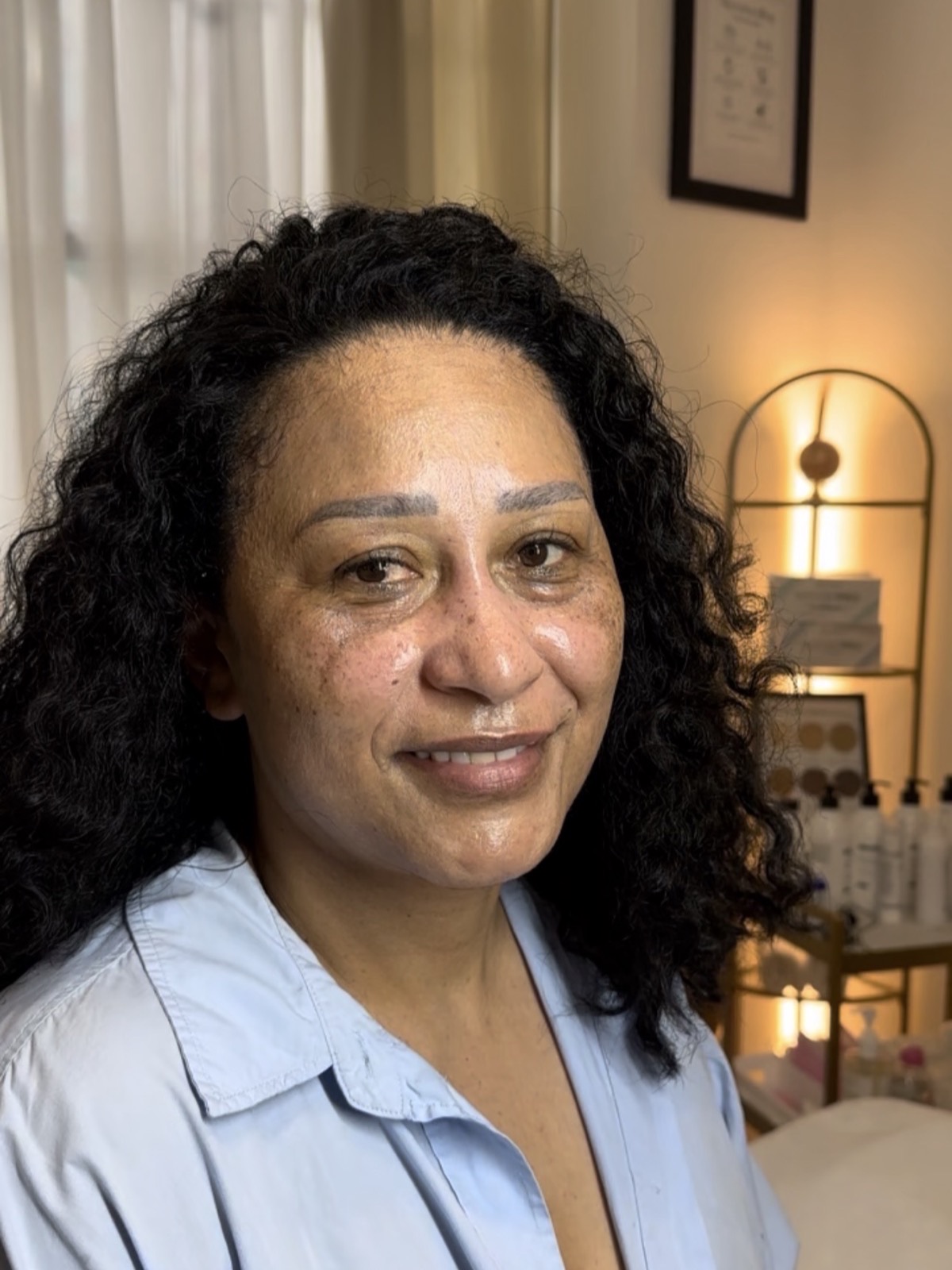
Treatment one of three
Nucleofill Eyes
What it is
Polynucleotides are short fragments of purified DNA. Placed under the skin, they are designed to interact with cellular receptors involved in tissue repair. Not a filler. Not a muscle relaxant. The regenerative category of aesthetic treatment.
01
A regenerative treatment that targets the structural layer beneath the skin surface, rather than sitting on top.
02
Polynucleotide-class injectables are studied for their effect on dermal water retention and barrier function.
03
Outcomes develop over weeks rather than immediately. Individual results vary; we discuss realistic expectations during your treatment.
Promoitalia · Italy
Nucleofill.
CE marked · Clinically researched
The product
Nucleofill is a CE-marked polynucleotide gel manufactured by Promoitalia in Italy. It is widely used in UK and European aesthetic clinics.
We chose it based on the manufacturer's product specifications, CE-marking documentation, and our clinical experience. We are happy to discuss the rationale during your treatment.
Three treatments
i.
Eyes
For the under-eye
Designed for the under-eye area: crepey lower lid texture, fine lines, and tired-eye appearance.
£200 · single
£540 course of 3, save £60
ii.
Full face
For overall skin
Designed for full-face application. Used in the polynucleotide category for skin firmness, hydration, tone, and fine-line appearance.
£200 · single
£540 course of 3, save £60
iii.
Scalp
For thinning and shedding
Scalp application of the polynucleotide gel. Used for thinning hair, weak hairlines, post-pregnancy shedding, and early-stage pattern hair loss. Brand-specific clinical evidence for this indication is limited; we discuss expectations honestly during your treatment.
£200 · single
£540 course of 3, save £60
A course of three sessions, three to four weeks apart, gives the strongest, longest-lasting result. Maintenance once or twice a year after that.
What the research says
Nucleofill is a CE-marked polynucleotide gel manufactured by Promoitalia (Italy). Peer-reviewed trial data published specifically on the Nucleofill brand in PubMed-indexed journals is limited. The research summarised below describes the polynucleotide treatment category, of which Nucleofill is one product.
Mechanism, category-level
Polynucleotides act on a receptor that supports skin-cell repair and matrix remodelling.[1]
A 2025 peer-reviewed review compares polynucleotide and polydeoxyribonucleotide pharmacology, describing adenosine A2A receptor activation and effects on extracellular matrix gene expression.
Periorbital, category-level
A polynucleotide injection (different brand) reported improvements in periorbital appearance.[2]
2026 prospective observational study of 42 patients using a separate polynucleotide-class product (Pluryal Silk, MD Skin Solutions). Significant improvements in lower-eyelid and crow's-feet patient-reported scores at every follow-up. Cited as category evidence, not as Nucleofill-specific data.
Note on evidence
Other polynucleotide-class products and adjacent polydeoxyribonucleotide molecules have additional published studies, including on midface skin quality, dermal hydration, and post-surgical scar prevention. These cannot be cited as Nucleofill-specific evidence; we have intentionally not framed them as such. We discuss the strength of the evidence for your specific concern honestly during your treatment.
References, indexed in PubMed
References, identified via PubMed, describe the polynucleotide treatment category. Individual product-specific clinical evidence varies. Marketing claims on this page should be read as category-level unless explicitly attributed to a named brand. The studies cited above evaluated PN fillers in general (including Pluryal Silk and Rejuran); Melatone uses Nucleofill specifically, which shares the polynucleotide mechanism of action.
The journey
One
Choose Nucleofill Eyes, Strong, or Hair on Treatwell. Or message us on WhatsApp if you would like a clinician to confirm which is right for you.
Two
Numbing cream, then precise micro-placements across the treatment zone. Discomfort is mild. Most clients return to work the same day.
Three
Outcomes typically develop gradually over weeks, with most reported changes settling between weeks 8 and 12. Individual results vary. A course of three sessions, three to four weeks apart, is the protocol we follow.
The clinic
Clinician-led, every session.
All polynucleotide injectable treatments are delivered by Arman Zaki, our Founder and GMC-registered Physician Associate (NHS-trained), or a member of our clinical team. You are never handed to a junior. Read Arman's full bio.
Battersea SW11.
Unit 13A, Battersea Business Centre, 99-109 Lavender Hill. Ten-minute walk from Clapham Junction.
Premium protocol.
Nucleofill by Promoitalia. We will tell you on your consultation why this brand and not another.
Treatwell verified.
Every review on our profile is from a real, verified booking.
By the numbers
★5.0
Google · 40 reviews · Treatwell · 36 reviews
10 min
From Clapham Junction
12 wk
Full result window
1 hr
Per session
Questions, answered honestly
No, polynucleotides and dermal fillers belong to different categories of aesthetic treatment with different goals. Filler is hyaluronic acid gel designed to add volume by physically occupying space under the skin. Polynucleotides are purified DNA fragments designed to act on cellular receptors involved in tissue repair, supporting your own skin's regenerative response over weeks. They are not interchangeable. Filler is right when the goal is volume restoration in a specific area, such as lips, cheeks or chin. Polynucleotides may be more appropriate when the goal is skin quality, hydration, or under-eye texture. We assess your specific concern at consultation and recommend the right category honestly, including saying no if neither is the right fit.
The most studied polynucleotide source in clinical aesthetics is purified salmon DNA fragments. The molecules are isolated, purified to clinical-grade standards, and the genetic information is removed during processing. What remains is a regenerative scaffold of nucleotides, not viable DNA, and it cannot transfer genetic material. Nucleofill, the product range we use, sources its polynucleotides this way and is CE-marked for clinical use in the EU. Salmon DNA has been chosen because its molecular structure is well-tolerated by human cells in published research. Patients with confirmed fish allergy or hypersensitivity should not have this treatment, and we screen for this in every consultation. If you have a known allergy, polynucleotides are not the right option for you.
Three sessions, spaced three to four weeks apart, is the standard treatment course supported by current clinical evidence for polynucleotide-class injectables. The interval is designed to align with the dermal collagen synthesis cycle, allowing each session to build on the response from the last. After completion, most clients return for maintenance once or twice per year, depending on individual response and skin goals. A single session can show some early change but is not the recommended protocol. We sell Nucleofill as a Course of 3 from £540 specifically because evidence supports the full course over single sessions. Individual results vary, and we discuss realistic expectations during your treatment.
Most clients begin noticing gradual changes around weeks 2 to 4 after the first session, with the strongest effect typically reported between weeks 8 and 12 after completing the full course. Polynucleotides work over time rather than immediately, because they are designed to stimulate your skin's own regenerative response rather than fill or paralyse tissue. The published evidence for polynucleotide-class injectables describes outcomes developing across the dermal layer over weeks, not days. The first sign for most clients is improved hydration and a calmer skin tone, followed by texture refinement and improved firmness as the course progresses. Individual results vary based on age, skin condition, lifestyle and Fitzpatrick type, and we discuss realistic expectations honestly at consultation.
Nucleofill Eyes is a polynucleotide product specifically formulated for the delicate under-eye area, targeting crepey texture, fine lines, and the tired-eye appearance caused by skin quality changes rather than volume loss. It is not a volume-replacement filler. The under-eye area is one of the better-studied applications for polynucleotide injectables, and published research on this region suggests improvements in skin elasticity and barrier function over the standard course. If your under-eye concern is hollowing or volume loss, a different category of treatment such as filler may be more appropriate. If your concern is dark circles caused by genetic vascular pigmentation rather than texture or hydration, no aesthetic injectable can change that, and we will tell you so honestly. Our clinical team will give you an evidence-based assessment at consultation.
Brand-specific clinical evidence for polynucleotide injectables in hair regeneration is currently limited, and we will be honest about that. The polynucleotide category has emerging research interest for scalp application, particularly for early-stage androgenetic thinning, post-pregnancy or stress-related shedding, and weakening hairlines where the follicles are still present but underperforming. Nucleofill Hair is designed to support the scalp environment and may improve the conditions in which existing follicles function. It is not a hair transplant, and it will not regrow hair from follicles that have already been lost permanently. Candidates with active early-stage thinning who still have visible vellus or miniaturised hair tend to respond better than those with completely smooth bald patches. We assess realistic expectations at consultation and will say if this is not the right fit.
Most clients experience small raised injection bumps that resolve within 4 to 24 hours, occasional pinpoint redness, and the possibility of light bruising at injection sites. Most return to work or normal activities the same day. We recommend avoiding strenuous exercise, alcohol, hot showers and sauna for 24 hours after treatment to allow injection sites to settle. Makeup can be applied gently the following day. Significant swelling, persistent pain, asymmetry, or signs of infection are not expected; if you experience any of these, contact us via WhatsApp immediately. For darker skin tones (Fitzpatrick IV to VI), we use conservative injection technique and confirm healing response at follow-up to minimise any post-inflammatory hyperpigmentation risk, which the literature identifies as the key parameter to manage in pigmented skin.
No, we do not deliver polynucleotide treatments during pregnancy or breastfeeding. This is a precautionary medical position consistent with standard UK aesthetic practice. While no specific clinical evidence indicates harm from polynucleotide injectables in pregnancy, there is also no published safety data confirming they are risk-free, and we will not treat without that confirmation. We will ask about pregnancy and breastfeeding status at every consultation. If you are planning a pregnancy or actively trying to conceive, we recommend completing any course of treatment before that point. We are happy to discuss topical skin care alternatives appropriate for pregnancy and breastfeeding during a consultation, and to schedule a treatment course for after you have finished breastfeeding.
All polynucleotide injectable treatments at Melatone are delivered by Arman Zaki, GMC-registered Physician Associate , who founded the clinic and trained in the NHS, or by a credentialled member of our clinical team following an in-person clinical assessment. Polynucleotide injectables are delivered by Arman and Vicki Lefeuve (Aesthetic Practitioner, regenerative aesthetics trained); the role map for polynucleotides is Arman as the lead clinician with Vicki as the second-chair injector. Every patient is reviewed by a clinician before their first session, regardless of which booking pathway they use. The clinic operates under the supervision of Arman Zaki as Founder and Lead Clinician. We do not subcontract injectable work to external practitioners. You will know who is treating you before any needle touches your skin.
For most clients, you can book Nucleofill Eyes, Strong, or Hair directly on Treatwell without a separate consultation, because the clinical assessment is built into your first appointment. The clinician will review your medical history, skin type, current concerns and goals, take photos for your file, and confirm the product and technique before any injection. If you would prefer to confirm which product is right for you before booking, you can either message us on WhatsApp for an informal pre-booking question, or book a 20-minute paid consultation on Treatwell (£30, redeemed against your first treatment if you proceed). We recommend the formal consultation route if you have a complex medical history, are taking medication that affects healing, or are weighing polynucleotides against other treatment categories.
Also at Melatone
Laser hair removal
SMARTDiode triple-wavelength laser, calibrated at your patch test. From £122.50 a course.
Explore treatment →HydroMED Pro
Advanced clinical facial, built for your skin not the next person's. From £65.
Explore treatment →Plan your visit
Directions, opening hours, transport, and the team you'll meet at SW11.
Plan your visit →Begin
Considered, clinical, in Battersea.
Important information
This page describes a regulated aesthetic medical treatment. Polynucleotide injectables are not a treatment for any medical condition; they are aesthetic procedures and results are not guaranteed. Individual outcomes vary based on skin condition, age, lifestyle, and adherence to the recommended protocol.
Treatment is delivered by a trained clinician following an in-person clinical assessment, during which suitability, contraindications, and realistic expectations are discussed. Polynucleotide injectables are available to clients aged 18 and over only. Polynucleotide treatment is not recommended during pregnancy or breastfeeding, in the presence of active skin infection at the treatment site, or in patients with certain medical conditions. Common side effects can include temporary redness, raised bumps, swelling, and bruising at the injection site.
Nucleofill is a CE-marked aesthetic medical device manufactured by Promoitalia S.r.l., Italy. Marketing claims on this page refer to the polynucleotide treatment category unless explicitly attributed to a named brand and cited study. We make no claims of guaranteed results. Always read the patient information provided at consultation and ask any questions you may have before agreeing to treatment.
Melatone Skin Clinic Ltd. Trading address: Unit 13A, Battersea Business Centre, 99-109 Lavender Hill, London SW11 5QL. For complaints or concerns, contact the clinic directly.
Polynucleotides by location
Practical detail for your area (transport, postcode, who delivers what):